Copyright © 2026 J and E Engineering Services Ltd All Rights Reserved








J and E Engineering Services Ltd.
Unit 32 Britannia Mill,
Stoneholme Road,
Crawshawbooth,
Rossendale,
Lancashire.
BB4 8BA.
Monday
Tuesday
Wednesday
Thursday
Friday
Saturday
Sunday
8:30am -
8:30am -
8:30am -
8:30am -
8:30am -
9:00am -
Closed

















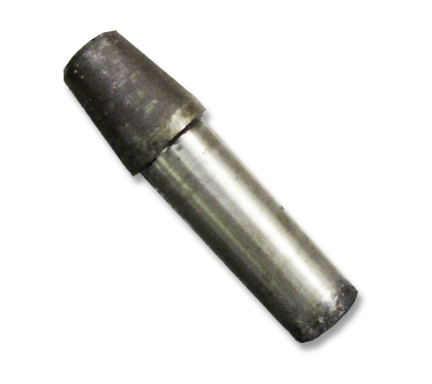
Original valve guides are made from a high quality SG iron an advanced material for its time which is very tough and difficult to machine. A smooth internal wall and larger top diameter to speed up installation, prevent slip and stop the valve guide from falling through. Different lengths for both intake and exhaust positions the inlet guide being the slightly longer of the two. Valve stem to guide clearance should be around .002”-
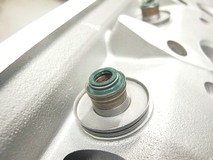
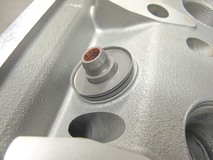
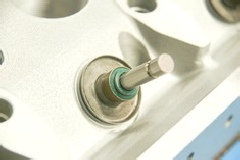
Smoking and oil burning complaints and issues plague the Daimler V8 engine to this very day. Engine oil can find its way into the combustion chamber by passing between the valve stem and valve guide wall. The puff of blue smoke during gear changes, on the overrun and excess smoke during start up are all telltale signs of this problem. Overtime the problem will get worse as the valve stems and guides wear. The rocker action is responsible for most of the wear here. When the engine is turned off engine oil will pool on the exhaust sides of the cylinder heads (Biased because of the Vee configuration) as it slowly drains back to the sump. Some oil will rundown the exhaust valve stems and straight into the cylinder or pool behind the exhaust valve seat. When the engine is restarted the oil is burned and again emitted as blue smoke. Of course worn cylinder bores and worn or damaged piston rings can also create similar symptoms so it is important to get the diagnosis correct. Below you can see how we use a modified valve guide with stem seal fitted to alleviate this issue.
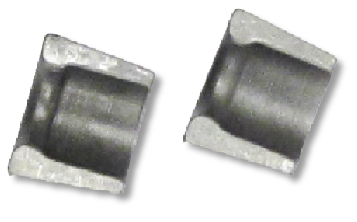

The collets on the left are a standard pair as fitted to early production engines. Later, Daimler introduced the “Padded” half collet (Part number 432971/1) in a poor attempt to quell the oil burning and smoking issues. The thinking here was that most of the oil produced by the rocker assembly was running down the gap between the two collet halves within the valve retaining cap and straight down the valve guide. The padded half use bonded pieces of rubber which filled the gap whilst maintaining the break between the two collets. This prevented the oil running directly down the valve stem. It did not however prevent any oil splash from the valve spring action from running down the valve stem resulting in the padded half collet idea having little, to no effect. Overtime the rubber will begin to perish and the bond will fail leaving small bits of rubber floating around in the engine oil.
Modern materials firstly “Nitrile” then “Viton” have made true valve stem sealing a reality and this is one of the modifications we carry out as standard to all rebuilt cylinder heads and full engine rebuilds. See below.


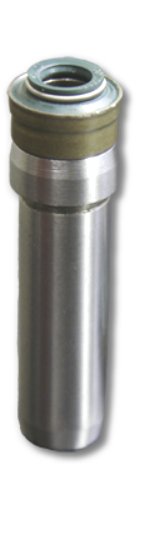
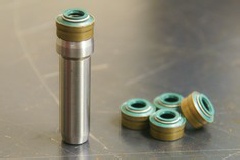
Here is our standard replacement valve guide. The top has been designed to accept the latest valve stem oil seal made from Viton. The material is a standard grey cast iron and is actually not as good as the original SG iron valve guide. It is however easy to machine


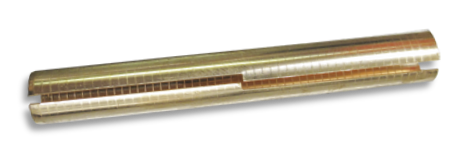
This is a genuine K-


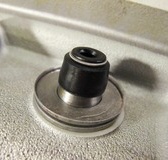
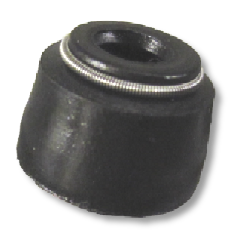
Here you can see a early style valve stem oil seal made from nitrile rubber. It simply fits on top of the new valve guide and the valve stem passes through it. It utilises a garter spring to increase pressure against the valve stem preventing engine oil from entering the valve guide. This seal is now outdated as it has been around for many years. This seal is actually taken from a BMC A’series engine and is made for a 9/32” valve stem (Approx 7mm) which means it can run slightly too tight for the Daimlers 5/16” (Approx 8mm) valve stems. This can lead to premature wear as the seal contact area can glaze as it overheats. Nitrile rubber is no longer used for modern valve stem oil seals as its heat resistance and long term oil contact properties are not good. This is what you might call old school.

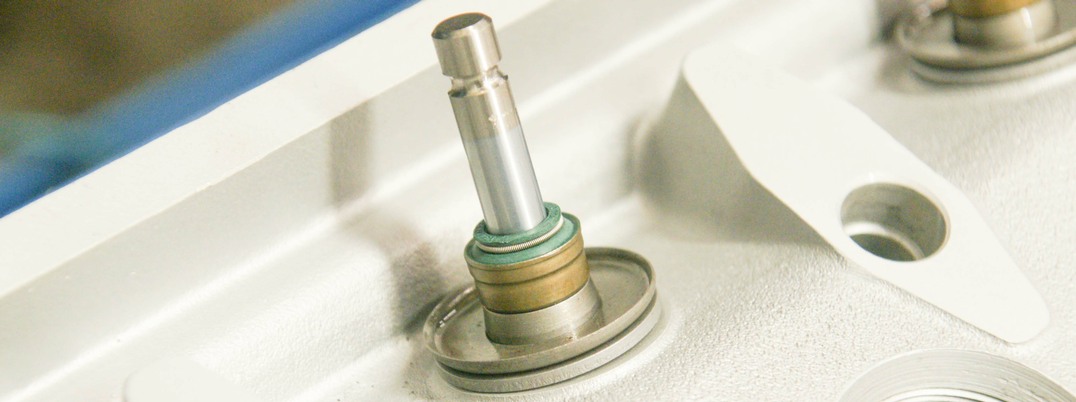
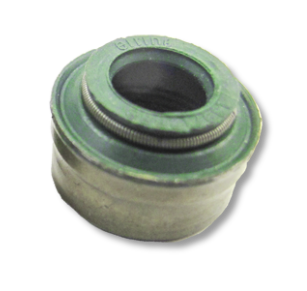
This is our modified valve stem oil seal. It is made from “Viton” and bonded steel, it will outlast the old style nitrile rubber seals by two. It is the correct size and made for a 5/16” valve stem complete with garter spring. The steel cage around the bottom helps maintain shape around the valve stem and fit on the valve guide preventing “Pop-