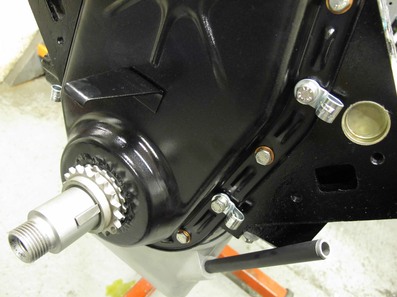
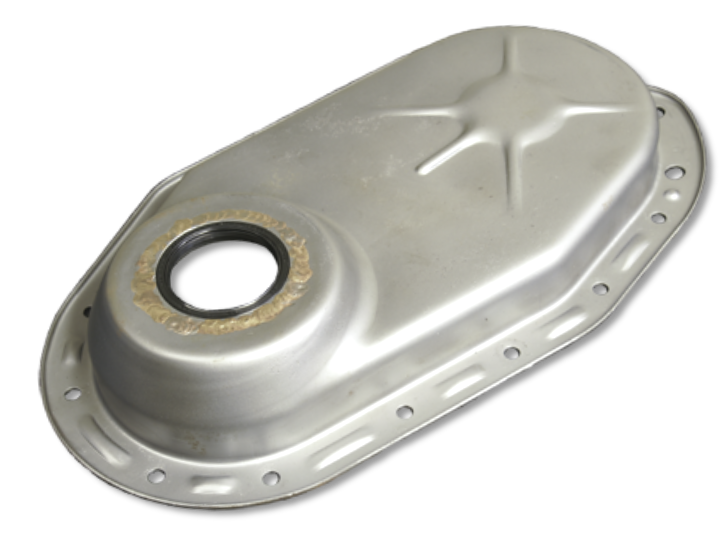
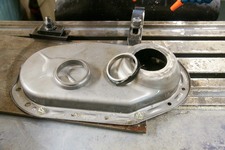
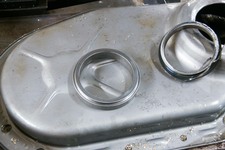
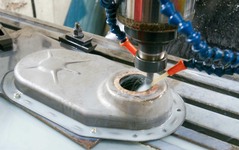
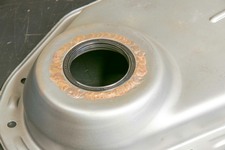
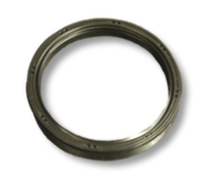
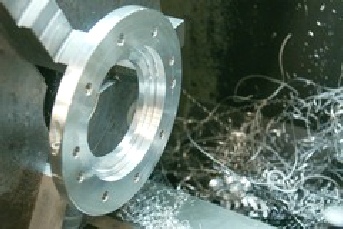
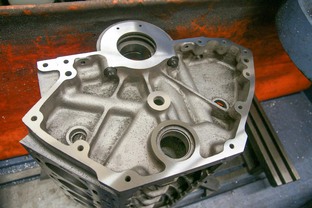
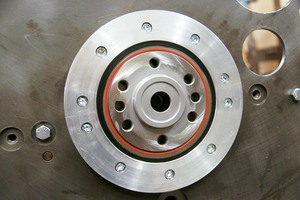
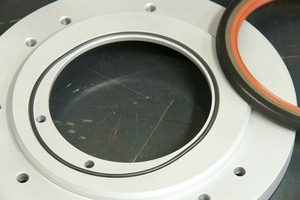
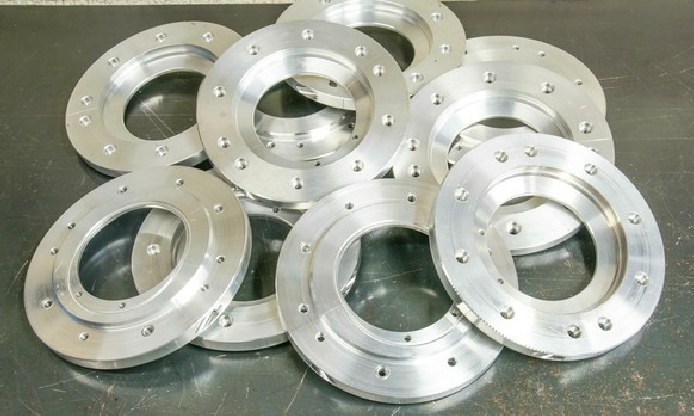
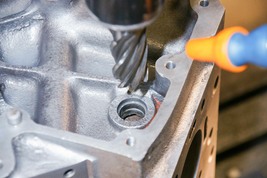
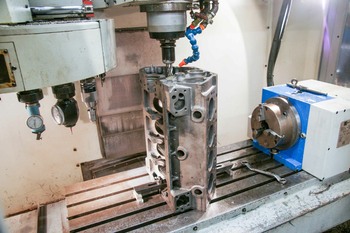
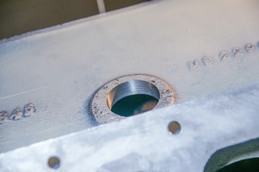
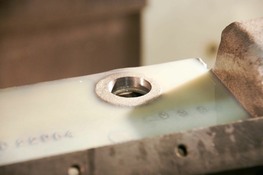
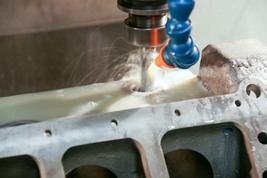
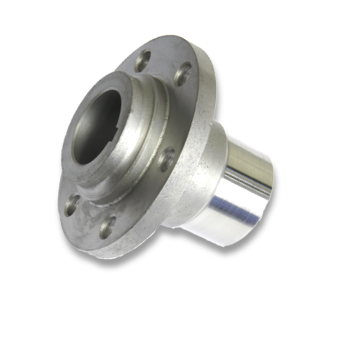
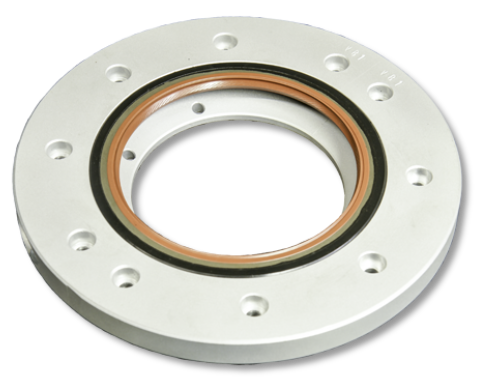
The Daimler V8 under original specification did not utilise a front crankshaft oil seal. It simply depended on engine vacuum, a reverse scroll on the damper hub and a close fit timing cover. This meant that oil can and would escape resulting in an annoying drip which would eventually coat the sump and underside of the car with oil. Our timing cover modification and damper hub are CNC machined and utilise a modern nitrile double lip oil seal. Images of the machining operation can be seen here.
First the timing cover is mounted to a “Jig plate” and set on the CNC milling machine. The centre of the original seal boss is found and then removed by machining. The hole is then increased slightly in order to accept a new sealing ring boss which is then tig brazed to the timing cover without removal from the jig plate. This ensures correct centre alignment when mounted back on the milling machine. The new seal boss is then machined to the correct outside diameter of the new seal. The damper hub simply requires machining to the inside diameter of the new seal remembering to leave a decent radius in the corner. The end result is a very neat & tidy job with minimal weight gain and maintaining original timing cover dimensions so that it looks correct when viewing the engine bay. Supplied fully blasted in bare metal ready to paint.
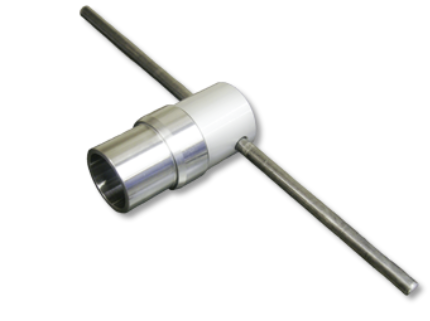
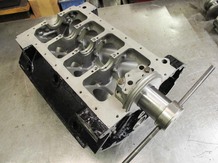
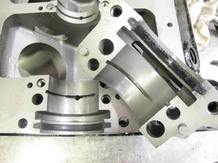
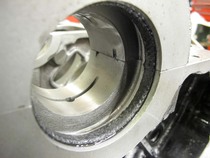
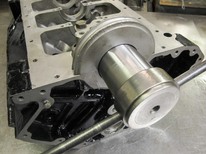
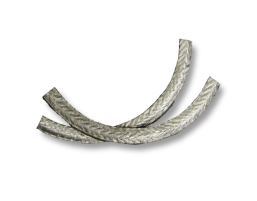
While the front crankshaft oil seal arrangement is the same for both the saloon and SP250 models, the rear is very different. The saloon makes use of a rope packing arrangement requiring a sizing & centralising tool to aid fitment. The SP250 uses a twin ring with offset scarf joint set up. The saloons rope type seal can be effective when fitted correctly. The pre-sizing tool D.505 ensures the seal will not burn and harden if too tight due to excess friction. Conversely it stops oil leaking if the fit is too loose. The main drawback of this type of seal is that its life expectancy is not great as the seal can dry out in cars with limited mileage. Vehicles which are also subject to long periods of inactivity can suffer from rear crankshaft seal failure as the crankshaft can sit heavy on the bottom section of seal and create a flat which will lead to a leak. It can sometimes recover from this with use, but not always.
J and E Engineering Services re-manufacture the seal pre-sizing & centralising tool D.505 and it is available for sale or to hire. Below you can see this type of rear seal during fitting and pre-sizing and centralising operations.
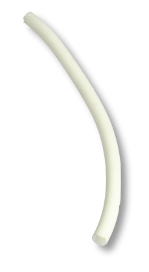
Beware of the “White” rear oil seal packings supplied in the readily available gasket sets from your parts supplier. These are a South Asian poor aftermarket replacement for the original seals. They are far too long and will tend to crack and become unbound when trying to fit inside the tight radius of the Daimler rear seal housing. Impregnated lubrication is also poor.
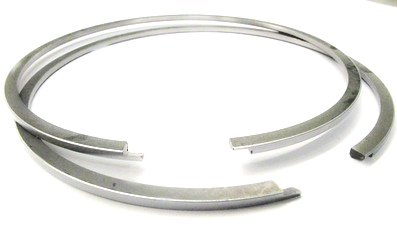
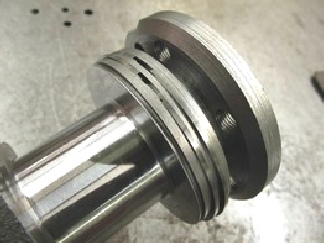
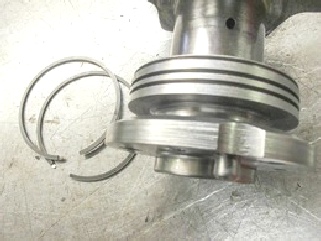
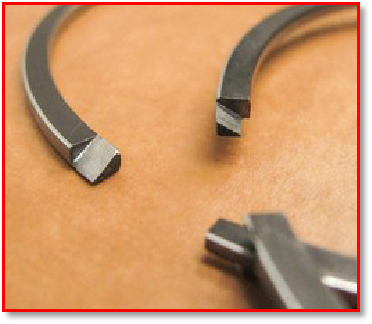
Here you can see the crankshaft rear oil seal set up for the SP250. It works in a similar way to a piston ring providing cylinder bore sealing against compression loss. Two sealing rings are used with the gaps/splits opposing each other. Again this method relies on decent crankcase vacuum and certain amount of good fortune in order to be an effective oil seal. The end gap is ground to include an offset scarf joint that helps create a labyrinth seal. The fact that any gap is present in this sealing arrangement compromises its efficiency. These sealing rings are incredibly fragile and will become brittle over the years. It is not uncommon to strip an engine and find these rings to be broken. Also removal from the crankshaft to balance the shaft properly can lead to broken rings. We manufacture precision ground replacement sealing rings if required. They are available as a pair or as a single ring replacements and can be seen here.
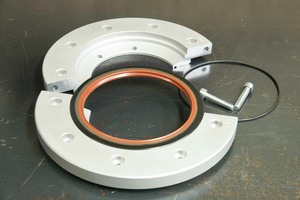
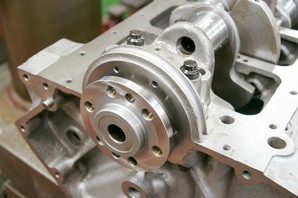
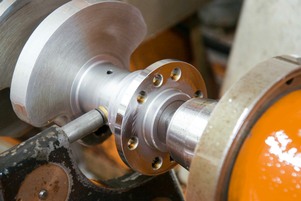
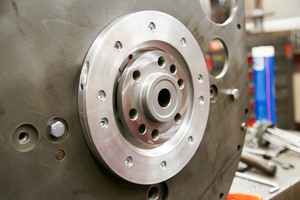
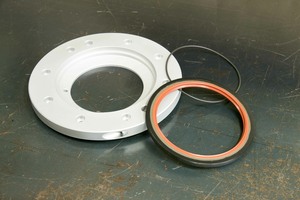
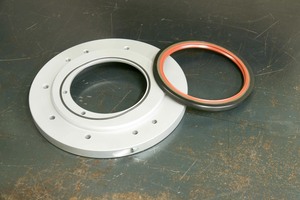
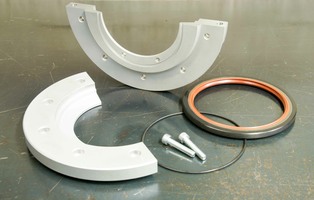
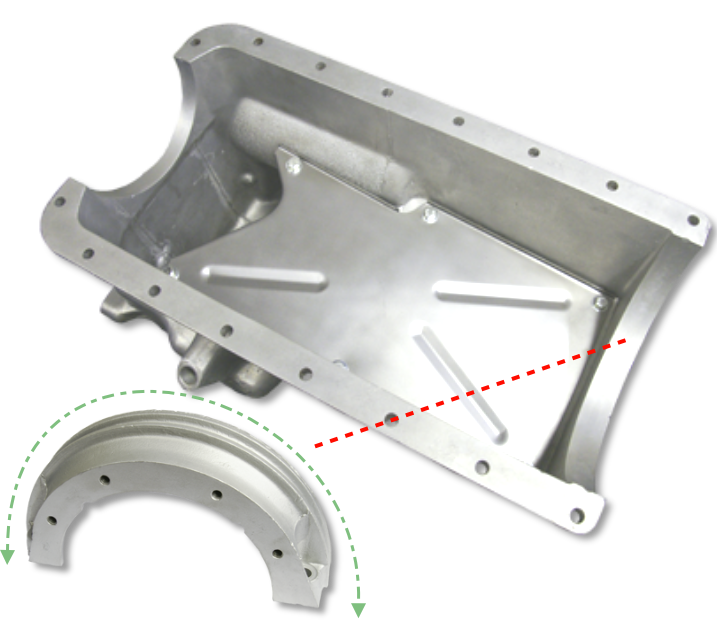
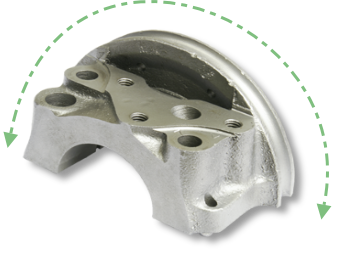
This is our crankshaft rear oil sealing solution for both V8 saloon and SP250 Dart applications. A complete 360 degree, modern double lip seal made from FKM/Viton fluro polymers. Enclosed in a bespoke billet alloy housing this is the ultimate rear oil seal for your Daimler V8 engine. Some specialist machining & modifications are required in order to fit but this is a non-destructive solution that retains both original sealing options so that your cylinder block remains un-touched. Engine back plate, crankshaft modifications and two cap drillings are all that is required. Suitable for both manual and automatic flywheel variations without any flywheel alterations required. The seal is NOT an inferior split seal, it’s a complete 360° modern seal good for 7500rpm. Below you can see some images of the housing during manufacture, and the modifications required to the back plate, crankshaft & main cap.
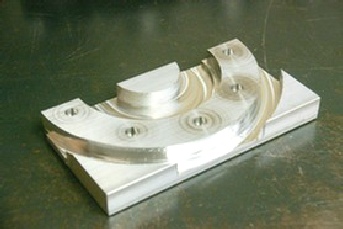
CNC milling one half of the billet alloy housing
Turning both halves of the housing to gain concentricity
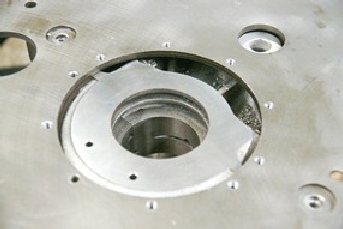
Drilling of the back plate concentric to the rear main bearing bore
Cleaning up of the rear block flange
Crankshaft grinding to seal diameter concentric with main bearing journals
Two cap drillings to both aid seal lubrication and prevent oil swamping.
Completed seal components ready to fit
Housing fitted & bolted
Oil seal fitted sealed & ready
Split alloy housing with joining screws, seal & O’ring.
Reverse side of housing with offset, elongated O’ring groove
Close up of O’ring groove with ring in place.
First production run after prototype & testing procedures. This seal kit is suitable for both saloon and SP250-Dart engines although there is a slight difference between the two applications.
The sealing of the sump pan to the cylinder block can be quite problematic and leaks here are common. Again, aftermarket solutions don't help matters. Here are some things to look out for.
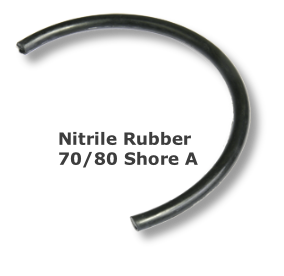
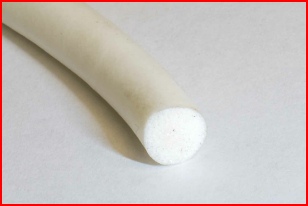
Nitrile rubber cord is what you will find in your aftermarket gasket set and on first impressions all looks good. When you come to fit the sump however you will find that you cannot compress the seal and you have to apply a huge amount of pressure via the sump bolts to close the gap between the sump flange and the block. Some people have even cracked the sump flanges or broken the front alloy hoop. Nitrile rubber loses stability at 108°C so it is right on the limit when used here. It has good resistance to oils and is difficult to tear, it is also, cheap. (As long as you don’t break your sump)
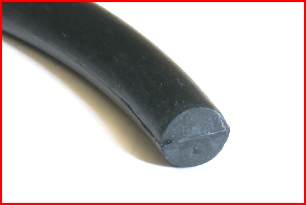
Silicone closed cell sponge cord is available from other vendors and it is very soft making it easily compressible. It also has a reasonably good temperature range peaking at around 200°C. The problem is with this product is that it is not suitable for contact with oils, solvents or fuels. Our own in house tests have shown this product to swell greatly and start to break up when subject to these fluids. Not great when trying to seal a sump. It is also easy to tear.
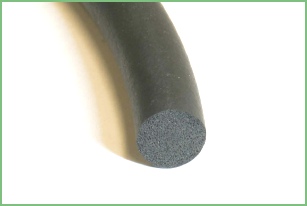
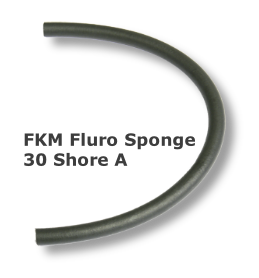
FKM (FPM) or Fluro-Elastomer closed cell sponge cord is the best of all worlds. It has a temperature range peak up to 300°C and has excellent resistance to the effects of oils, hydrocarbons and fuels. Therefore it will not swell or shrink. It is the perfect hardness for sealing the sump pan and sits between the nitrile rubber and silicone products, not too hard and not too soft. This material is also tear resistant. Of course there is always a down side and that is the FKM is much more expensive than the other two products. Another name for FKM is “Viton”.
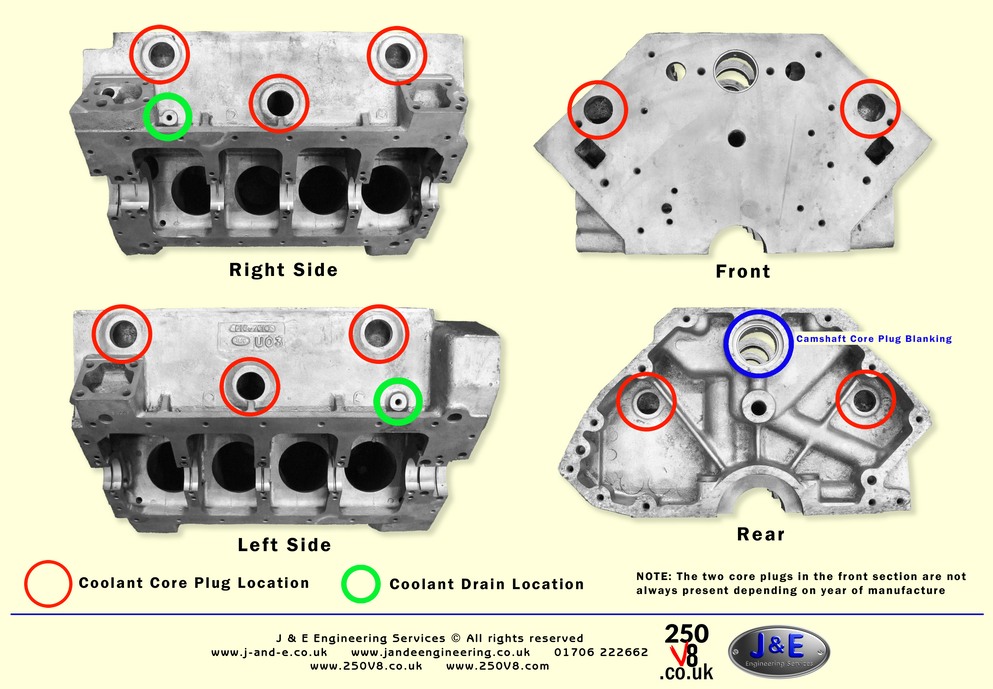
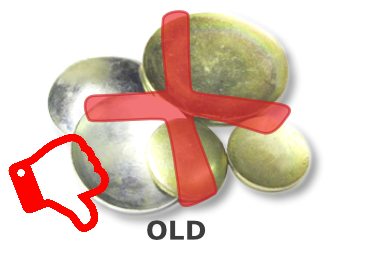
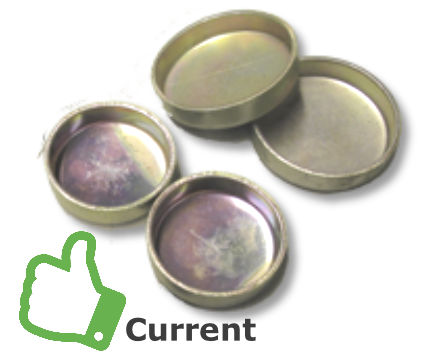
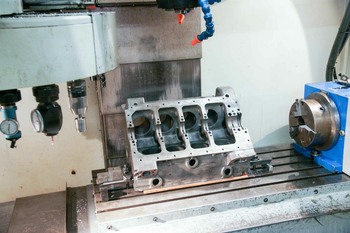
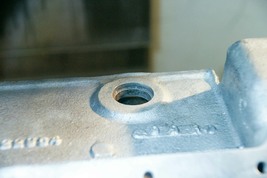
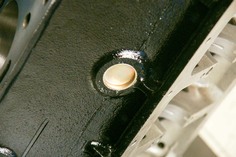
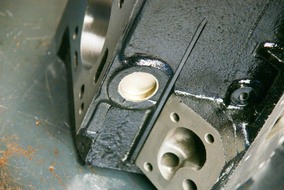
This modification carries on from our cylinder head upgrades of replacing the old style dish type core plugs for modern cup type core plugs. A cylinder block core plug popping out is again, not uncommon. The problem is the replacement of the block core plugs in situ is incredibly difficult and the engine should be removed in order to do the job properly. The cup type core plugs maintains a much greater surface contact/sealing area over the dish type plugs point contact. This makes it much more reliable and this method is currently used in the vast majority of modern engines.
Once the block is set up on the milling machine square and true we can begin machining a new hole for the cup type core plug. The CNC machine uses an interpolation to machine the hole to the correct size. We use a go/no-go gauge to keep track of sizing and make sure the new plug has the correct amount of interference fit. Below you can see the core plug holes after the machining process. The finished plug is very neat and tidy when fitted and is a much more reliable solution than the original dish type plug of old.
Early block castings utilise 10 dish type core plugs for coolant sealing. Later block castings use only 8 plugs.
If you are familiar with the Daimler V8 engine you will undoubtedly know that its oil tightness leaves something to be desired. Close fitting reverse scroll sealing for the front of the crankshaft works surprisingly well when the engine is running but when stood can leave a puddle of oil on the floor. Crank sealing for the rear was originally a dual split ring set-up later superceded by a more conventional (For the time) two half rope type arrangement. Again both can be troublesome as the ring type can pass oil through the splits and also seize in extreme cases. The rope type is difficult to replace does not age well. On this page we will take a closer look at the problems and show you how we can improve oil sealing using our replacement or modified parts.
ABOVE: Modified timing cover with centralising tool