Copyright © 2026 J and E Engineering Services Ltd All Rights Reserved








J and E Engineering Services Ltd.
Unit 32 Britannia Mill,
Stoneholme Road,
Crawshawbooth,
Rossendale,
Lancashire.
BB4 8BA.
Monday
Tuesday
Wednesday
Thursday
Friday
Saturday
Sunday
8:30am -
8:30am -
8:30am -
8:30am -
8:30am -
9:00am -
Closed
















One problem that is becoming more and more common is that of seized / sticking exhaust valves. We have now seen this on numerous occasions and not exclusively to the Daimler V8. Of course sticking valves in general are nothing new and these problems usually manifest themselves as rough running, misfires, hesitation, popping noises etc. What we are now seeing however is something new and much more severe as the valves are not just sticking they are fully seizing within the valve guide. Lets take a closer look at the failings and discuss the possible causes.
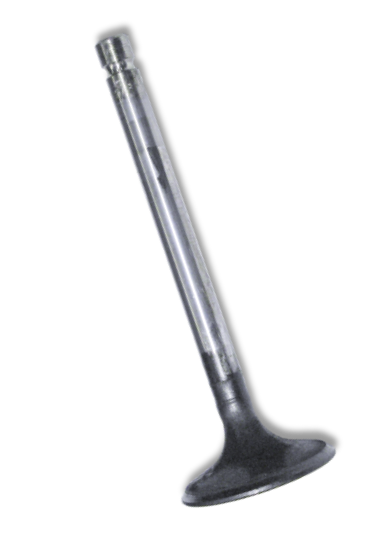
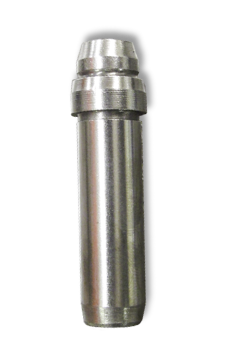
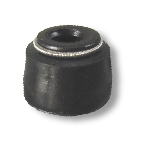
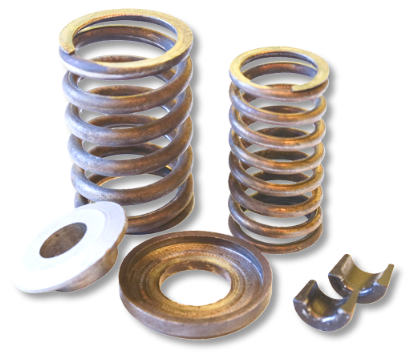

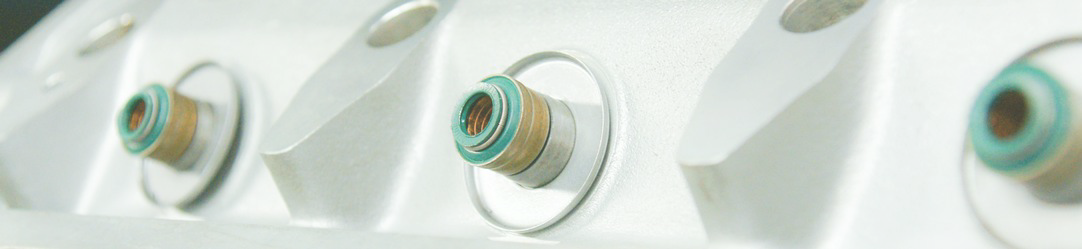
Above you can see the exhaust valve train components. The valve itself, the springs, collets, retainer cap, spring seat, modified cast iron valve guide, pushrod, rocker arm and the commonly used nitrile valve stem oil seal with garter spring.
While cruising at 3000rpm the valve will cycle open and close 25 times per second. The cycle is controlled via the camshaft, follower, pushrod and rocker arm for opening the valve and the double valve springs for closing the valve. The standard double valve spring for the Daimler 2.5 V8 offers a seating (valve Closed) pressure of 55lb and a valve fully open pressure of 118lb. The cast iron valve guide ensures the valve operates in a smooth linear motion with little deviation so that a good valve seat is maintained. The nitrile seal prevents engine oil travelling down the valve stem into the combustion chamber.

A sticking exhaust valve does not operate smoothly within the valve guide. It can be slow to react and return to its seating position which in turn will show as a misfire, exhaust pop and general rough running. We only ever see this type of issue in engines which have stood for long periods of time in damp humid conditions and it can affect both intake and exhaust valves equally. A sticking valve situation will usually only affect on one or two valves within an engine which has run previously. Incorrect valve stem to guide clearance and insufficient lubrication can also cause this problem and is more common in engines or cylinder heads which have undergone a recent rebuild. While operating our engine machine shop and working within the engine rebuilding industry for over thirty years we have seen valve sticking issues only a handful of times.


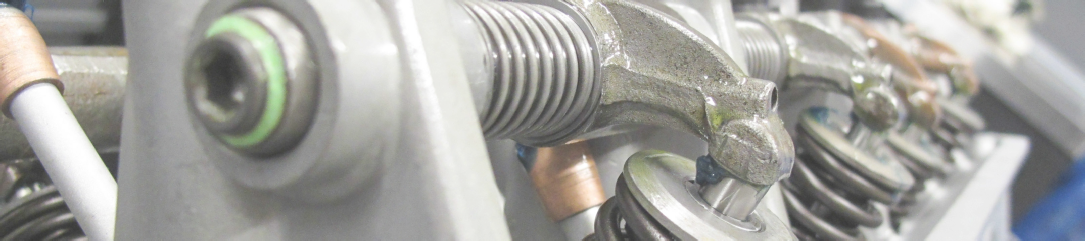


Starting around the middle of 2025 we have started to notice an ever increasing number of fully seized exhaust valve situations. This problem has also lead to extensive consequential engine damage something that rarely occurred as a result of a sticking valve. This new problem only affect the exhaust valves and it will evident on all the exhaust valves within the engine to some degree. The intake valves are always unaffected.
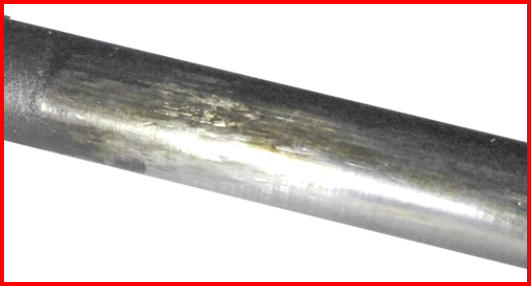
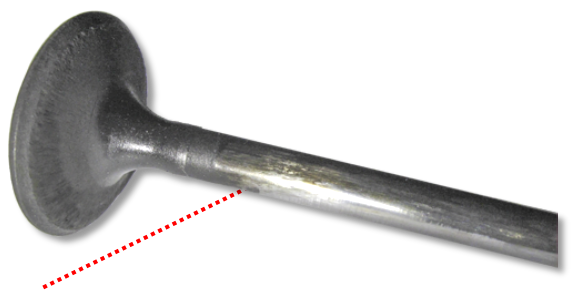
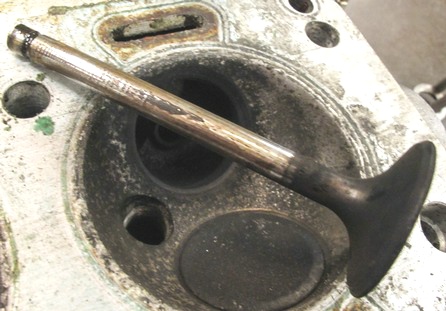
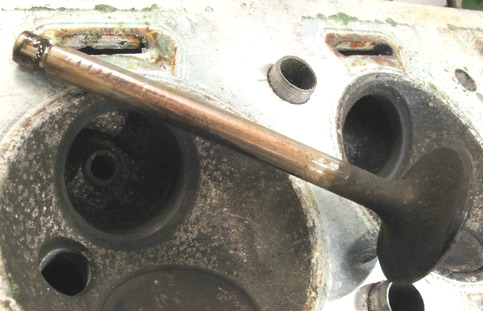
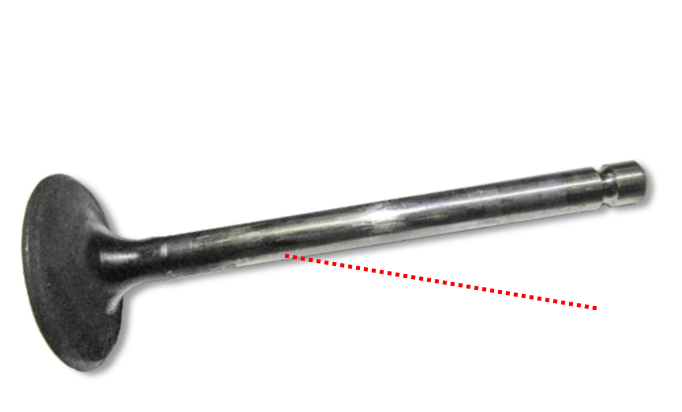
Above you can clearly see that the exhaust valves have seized within the valve guide. This is confirmed by observing the valve seat area and noticing that it is black in all examples. This means that the valve has been open during the combustion process resulting in a burned seat.
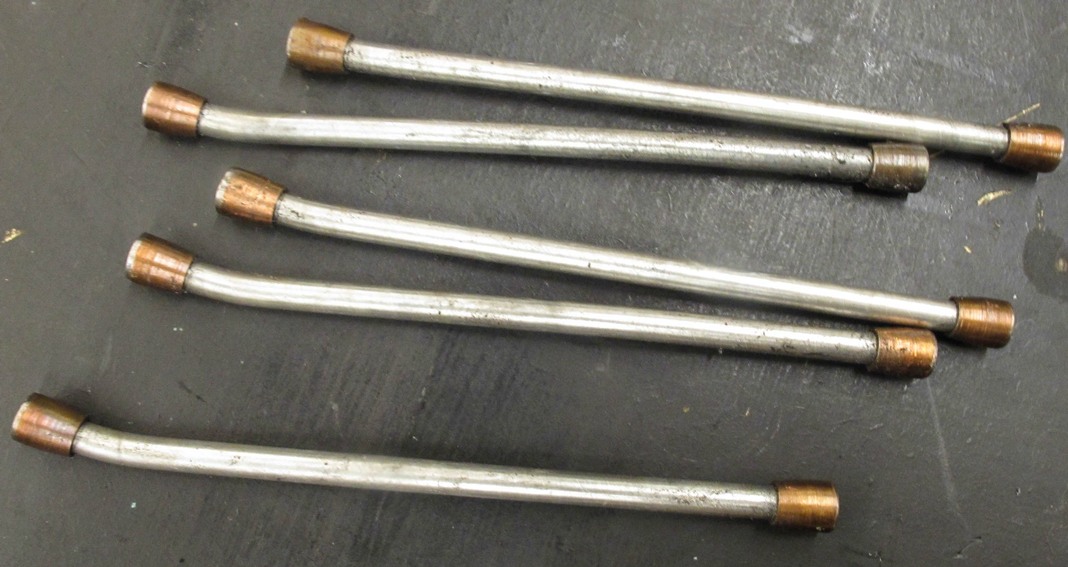
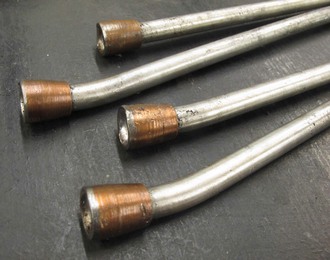
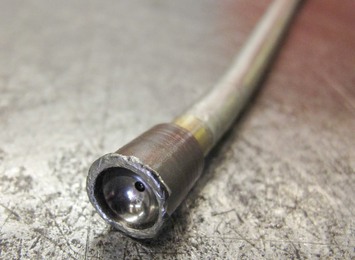
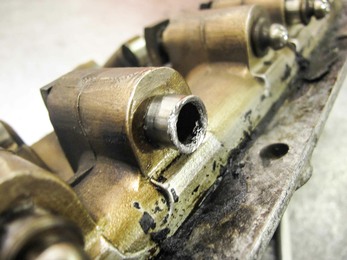
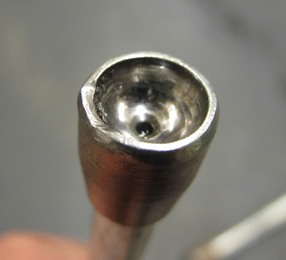
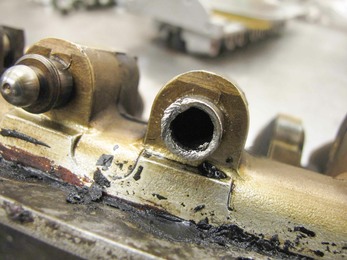
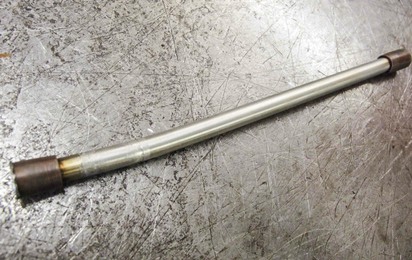
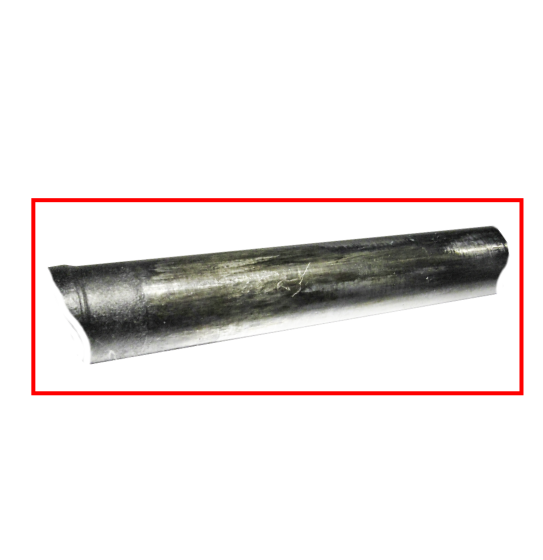
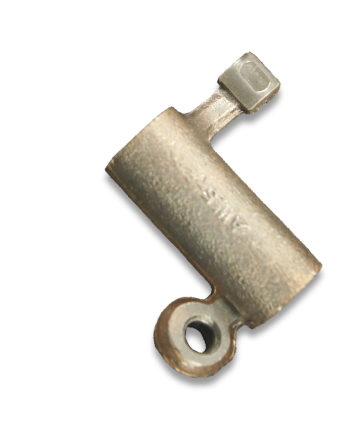
Should the valve seize in the fully closed position then we enter a scenario of an immovable object against an unstoppable force. The valve cannot open as it is seized and the camshaft is approaching full lift trying to open the seized valve, something has to give and that will be either the rocker arm or the pushrod. In this situation the alloy pushrod will bend (As above) or the pivot end of the rocker arm will deform. Sometimes the rocker arm will be peeled off the rocker shaft such is the severity of the valve seizure. Quite amazing.
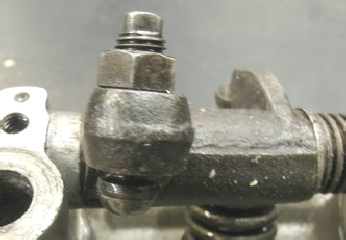
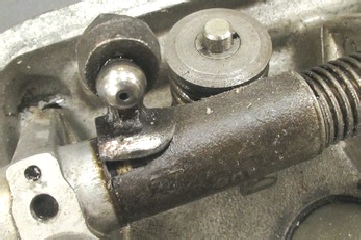
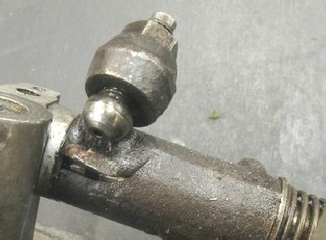
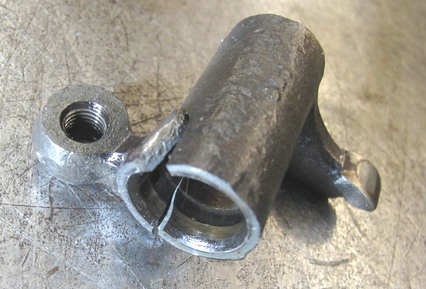
Remember the evidence you see here is not taken from just one engine failure example. At the time of publishing this page we have physically come across this issue on four separate occasions specific to the Daimler V8 engine as well as many other failures from other makes and marques. The evidence shows that this specific problem will only effect the exhaust valves and guides.
If the valve seized in a fully or partially open position then as the camshaft rotates to base circle (Zero lift) a larger than normal valve clearance is created and as a result the pushrod can slip from the ball end of either the camshaft follower or rocker arm adjustment screw. Then as the camshaft begins to produce lift it actuates a pushrod that is no longer located correctly. This will almost certainly result in pushrod damage as seen in the many examples below.

The ‘Galling’ or ‘pick-
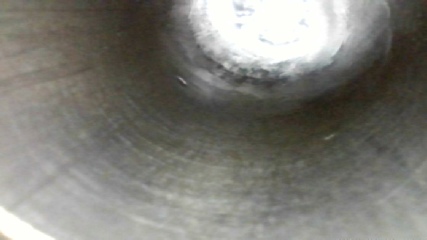
Above you will see some boroscope images of the inside surface of the intake valve guides. Both images taken from two different cylinder heads which had suffered exhaust valve seizure. You can see the surface is uniform and sound showing only the lightest of vertical scores. This is in stark contrast to the exhaust valve guide images taken from the same cylinder heads shown below.
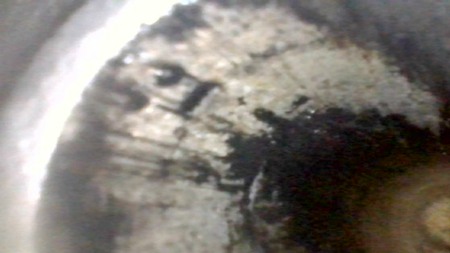
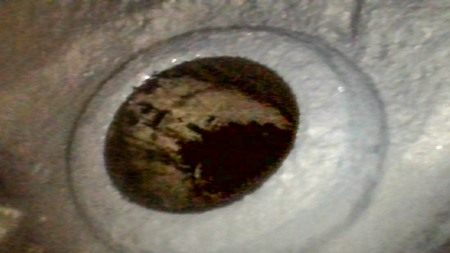
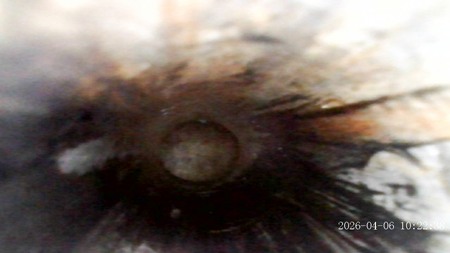
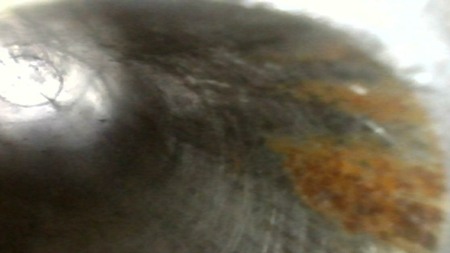
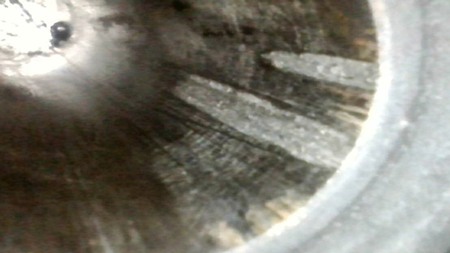
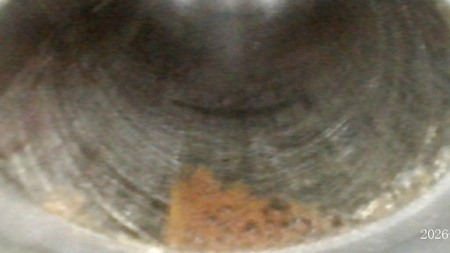
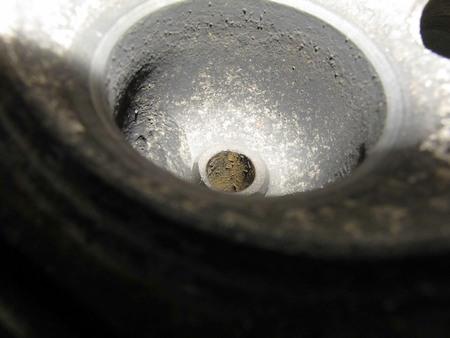
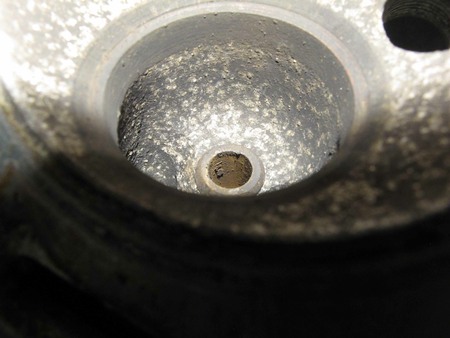
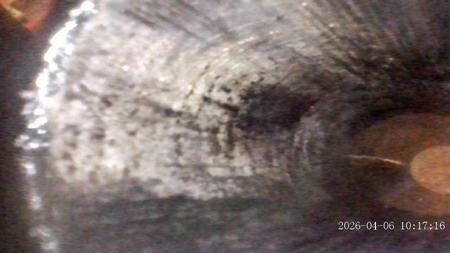
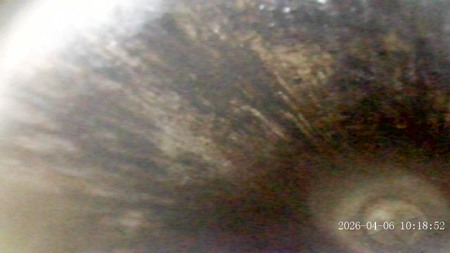
By now you should be getting an idea of the problem being discussed. The images of the exhaust valve guides seen above speak for themselves and the deep linear scoring, corrosion, metal growth and galling can be seen clearly.
We have established that the exhaust valve seizing within the valve guide is the problem. In order for the valve to operate effectively it needs enough clearance (Stem to guide) to allow for expansion and sufficient lubrication in order to operate smoothly back and forth. If these two criteria are satisfied the valve will operate for many thousands of miles without issue.



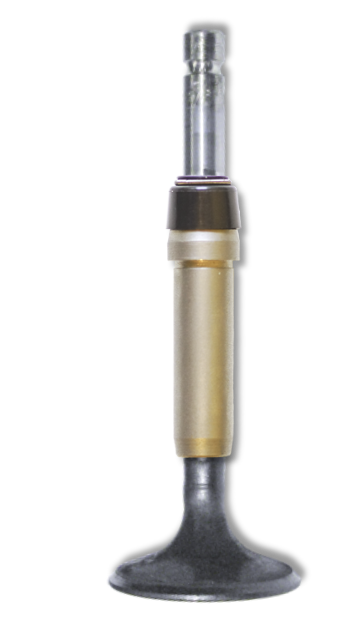
Valve stem to guide clearance could certainly be to blame here. The exhaust clearances should be greater than the intake positions to allow for greater expansion in the same way that the valve rocker clearances are larger for the exhaust valves. We know that the seizure starts and is concentrated at the valve head end where temperatures are greatest. We can measure the internal diameter at the top of the guide where no seizure damage is present and measure the valve stem in order to calculate the clearance. A rule of thumb clearance for the exhaust is .002” to .004” and the clearance recommended for the Daimler V8 is actually .0008” to .0022” certainly on the tighter side of the general rule. We measured the guides and stems of the seized guides between .0045” and .006” (and in one case .008”) well on top of the recommended. So provided the valve guide had been bored or reamed parallel we can eliminate insufficient clearance being to blame.


Of course many Daimler V8 engines have had the cylinder heads rebuilt to eliminate the blue smoking issues utilising a modified valve guide and valve stem oil seal. The valve stem oil seals job is to prevent excess engine oil from passing the valve stem & guide into the combustion chamber where it is burnt. Easy to understand right? Well yes and no. A common misconception is that the valve stem seal should eliminate any engine oil from entering the valve guide. This is not true, the valve stem oil seal is designed to allow a metered amount of engine oil to enter the valve guide and it is this oil that lubricates the valve and guide preventing seizure. Now; as mentioned on our “Valve Guides & Seals” web page, the black nitrile valve stem oil seal commonly used is actually taken from a BMC A’series engine as fitted to A30’s Minis and Morris Minors. This A’series engine is fitted with intake and exhaust valves with a stem size of 9/32 (Approx 7mm). This means that when the Daimler 5/16 (8mm) valve stem is used with this seal fits too tightly and it has to distort plus conform to something it was not designed for. This prevents the stem seal from allowing any lubrication oil to pass resulting in a dry valve stem and guide situation. This particular guide, seal and valve stem combination has been used for may years and it can be argued that it has worked well without any valve seizure problems. This is very true but that does not mean to say that it is correct and the lack of any lubrication certainly won’t help matters here.

The cast iron valve guide as supplied by all the usual part suppliers is manufactured in South Asia and the quality of the metal used is unknown. It is however unlikely to be the finest cast iron ever produced. Internal bore finish and surface roughness is also unknown and these factors can also contribute to the the seizure problem. Then mix this with a valve stem of unknown micro structure, carbon, chromium content etc and we can see how the metallurgy of the components can have a hand in this issue. Galvanic corrosion, carbon migration and thermal stress are all valid factors that can influence the valve guide and valve stem relationship. It is a fact that stainless steel valves which are required for unleaded fuel use, do not work well with cast iron valve guides and such a combination is not recommended.

In all the exhaust valve seizure cases we have come across one common factor is that all the engines had been rebuilt recently. One had covered around 500 miles never really ran as expected and had a tapping noise since its rebuild and the other three had only been subject to initial running periods of 40 minutes, 5 minutes and 15 minutes approximately. All engines had been rebuilt by non-

Modern petrol whether it be E5 or E10 classification contains a certain amount of ethanol in an attempt to reduce carbon emissions. Ethanol however is classed as highly hygroscopic which means it readily absorbs moisture from the atmosphere. It would not be unrealistic to therefore assume that the fuel had a certain amount of water it. This water cannot be burned during the combustion process and as such it is evacuated as steam along with the other exhaust gases. With this in mind it is possible to see that this steam could condense on the exhaust valve and stem which in turn could lead to a corrosion issue. The borescope images seen above clearly show signs of rust corrosion and metal growth as being a factor.
In contrast to this theory this could be the reason we do not see any valve seizures related to the intake or inlet valve. This is because the fuel brought in through the carburettors is fresh and it carries all the additives and upper cylinder lubricants which directly contacts the intake valve as it passes into the cylinder, cooling and lubricating as it goes. We think this is why we do not see any intake valve seizures.

Although the exact cause of the exhaust valve seizure is currently unknown (We are not scientists or Metallurgists) there is no denying that the problem exists. Our thoughts on the matter is that the cause is likely to be a combination of all the above. The main contributors being poor lubrication, material/metallurgy conflicts between the valve and guide and the fuel which triggers the chain reaction and inevitable valve seizure. If so the problem is going to become more and more common and as stated above ‘There may be trouble ahead’ and if proven correct remember you heard it here first and it might well be worth investing in a pushrod manufacturing company……