
Copyright © 2026 J and E Engineering Services Ltd All Rights Reserved








J and E Engineering Services Ltd.
Unit 32 Britannia Mill,
Stoneholme Road,
Crawshawbooth,
Rossendale,
Lancashire.
BB4 8BA.
Monday
Tuesday
Wednesday
Thursday
Friday
Saturday
Sunday
8:30am -
8:30am -
8:30am -
8:30am -
8:30am -
9:00am -
Closed















In this case study we will discuss the pros and cons, the reasons why and the possible problems that the coating/painting of internal engine components can cause. We have used internal engine paints in the past and in certain specific circumstances we approve of the procedure as some benefits can be achieved. Like all good things there are also some problems and issue which you should be aware of and that is the reason for this case study. It is based on what we have learned and seen as a long standing engineering company that specialises in the repair and rebuild of internal combustion engines.
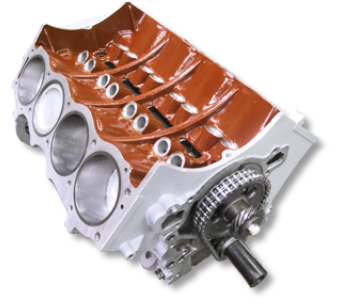
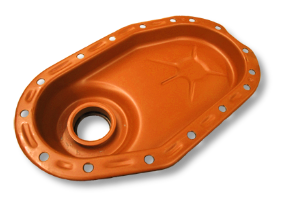
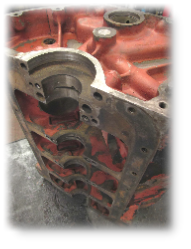
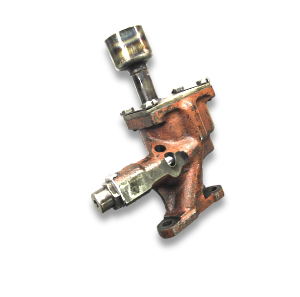
In our experience it seems many British car manufacturers utilised internal/external engine coatings as part of standard production from the 1950’s right up to the 1980’s. Jaguar cars, Daimler, Rolls Royce, Land Rover, Bentley & Standard Triumph are a few manufacturers that used such coatings. Most coatings were red in colour although Standard Triumph used a black engine coating. Most manufacturers only coated the cylinder block and no other engine parts. Daimler Cars on the other hand additionally coated oil pump, camshaft sprocket and timing cover with their red coating.
It is unusual to see evidence of US manufacturers using these coatings as standard yet it is relatively common for engine builders & racers in the USA to use coatings as enhancements.
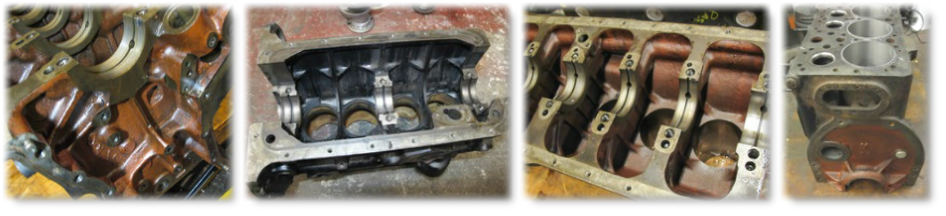
Manufacturers painted their engines for a number of reasons. The most likely reason was corrosion resistance after initial casting. Cast iron will rust very quickly if not protected. The whole block can be easily coated after being freshly cast during the cooling down period. A second possible reason was to ensure that the machining operations like surface machining, line boring, spot facing & crank clearance milling were carried out correctly and not forgotten, as these areas became easily visible during production. Another reason was to stabilise the block interior walls after the casting process. Any surface defects or anomalies, dross, inclusions and slag could be retained under the coating and prevented from causing harm to the new engine during mass production. Any porosity and pinholes could also be cured by applying an internal coating. While engine builders and racers paint the inside of their cylinder blocks not only for the same benefits but in addition to improve oil flow and oil control as the oil is less likely to cling to the rough interior walls and castings and efficiently return to the sump where it can be quickly reused. It is unlikely that manufactures of the day were concerned with these oil control and flow benefits as can be seen in the images below.
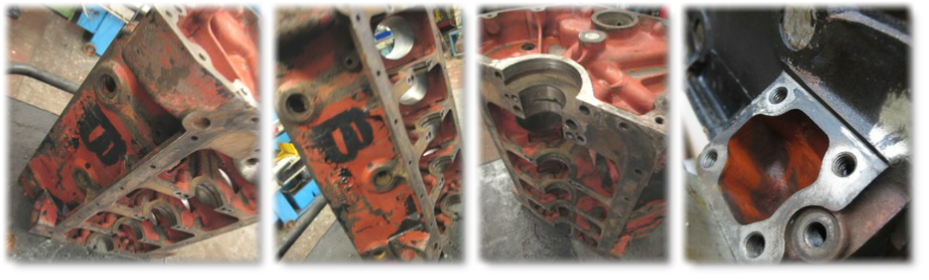
The images above are of a Daimler V8 cylinder block. The red paint can be clearly seen both on the inside and outside. The large letter “B” would have been some kind of identification during manufacture perhaps bore grading or something similar. It is obvious that the red paint was not applied to aid oil control or oil flow in this instance as the area behind the flywheel and outsides of the block have also been treated which do not come into contact with engine oil. The outside of the block would have been subsequently painted black in the case of most engine manufacturers prior to or in some cases after assembly. The image far right is of another Daimler block and the red paint can be seen in a cavity behind the right hand engine mounting bracket. It can be seen clearly that all machined faces bores and threads do not show any signs of the red coating evidence that all machining work was carried out after any coating process. Below left a one owner Jaguar XK engine can be seen again indicating a red coating behind the black. Interestingly all the internal coating seems to have disappeared in this example. Below centre and right are examples of a different Jaguar cylinder block of which the internal coating can be seen.
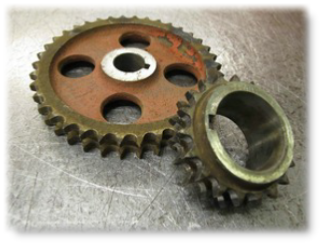
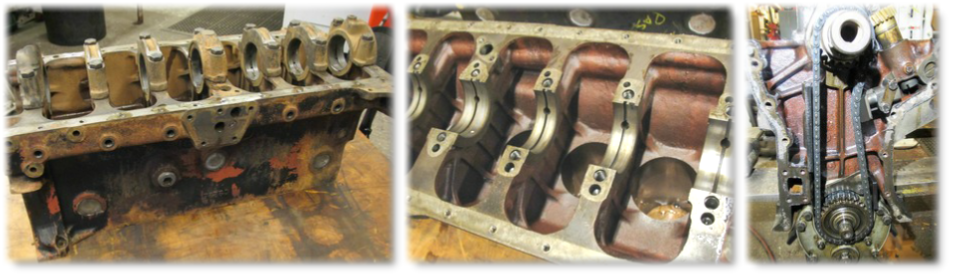

Above left a Rolls Royce cylinder block with painted cam follower gallery. Middle is a Mercedes M127 six cylinder with crankcase coating applied. Above right the cast iron camshaft timing sprocket and oil pump assembly from a Daimler V8 with no colour visible on the machined faces. It is unusual to see separate internal engine components coated in the same manner as the cylinder block however one common denominator is that all these parts are cast iron. The crankshaft sprocket which is steel is not coated for example nor is the steel oil pickup pipe & flange or oil pressure relief valve on the oil pump. In all examples it can bee seen that the coating has been eroded over the years.
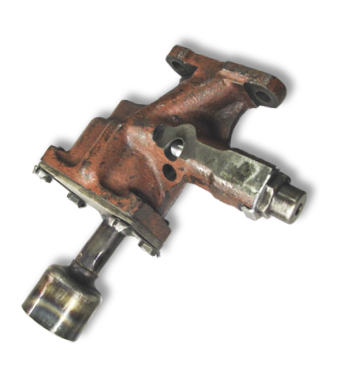
The internal coating has a really hard time in one of the most hostile environments imaginable. High overall temperatures, large temperature swings over short periods of time creating condensation and the fact that blowby gasses from the combustion process contain sulfur will create sulfuric acid (among other acids) when mixed with water. Combined with this your engine oil has additives which promote the cleaning effect of the engine oil to help keep the inside of the engine spick & span. The internal engine coatings have spent a lifetime doing battle with the engine oil in an endless struggle to stay attached. The images above all show a faded red colour indicating that the paint/coating is losing this very battle and as the coating begins to fail it can do so very quickly.
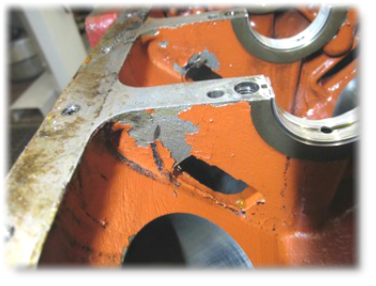
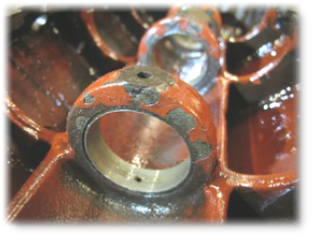
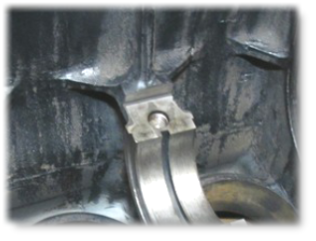
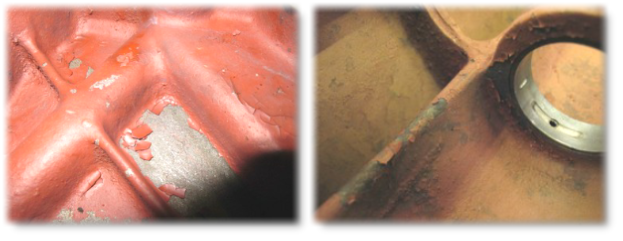
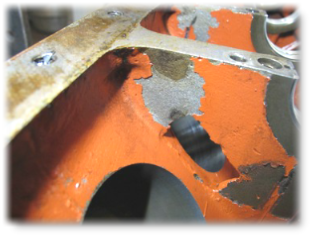
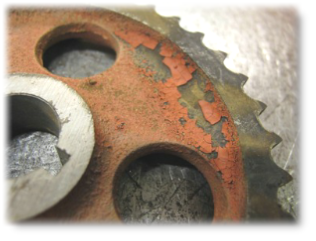

Above you can see different examples of the internal paint coating beginning to fail. Once the coating chips, or blisters it is going to fail as the engine oil will search out the problem and creep under causing more and more paint to lift. The problem is that these chips or flakes of paint some small, some not so small can block up the oil pickup pipe starving the critical engine components of lubrication. Interestingly the image bottom right (A) is a Daimler V8 pressed steel timing cover, the only non-


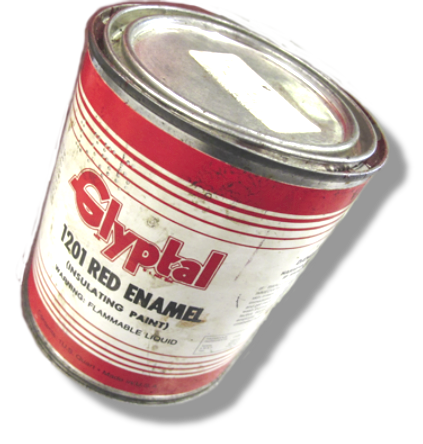
Should you wish to reapply the internal coating as part of your engine re-

Air dry To Touch
Recoat
Flash Point
Chemical Resistance
Oil (Transil)
Water
Salt Water
Acid
Alkali
Excellent
Good
Good
Good
Fair-
2 hours
Overnight
Below 100° F


1201 is suggested as general-

Surface to be painted should be dry and free from dirt, wax, grease, rust and oil. Remove all grease and oil by washing surface with mineral spirits. Wipe or scrape off all loose dirt, rust or scales

1201 Red Enamel is designed for use by brush, spray, flow or dipping. For best results apply on clean dry surfaces at temperatures above 50°F. Thin with Glyptal Thinner 1500. When possible 1201 Red should be baked for a period of 2 hours at 125°C or equivalent. Successful painting by brush requires the use of a proper brush.
MIX WELL BEFORE USING

This product is designed exclusively for industrial use by trained maintenance professionals. Labeled directions and precautions must be followed exactly. Do not use without reading Material Safety Data Sheet for a full knowledge of all the product ingredients and their health risks. Glyptal is not responsible for injury, loss or damage if product is used in any manner not in compliance with label directions or if precautions are not observed


It is very important to follow the application instructions. Applying any kind of paint can be tricky and like most things much is down to preparation in order to achieve the required result. This is where you may encounter some difficulties in this particular application. The complete removal of all grease and oil from the inside of a cylinder block that has been coated with oil for the last 60 or so years wont be easy. If the original paint has started to flake or chip (As seen in the examples above) this too must be completely removed. The instructions indicate the coating has “Excellent” oil resistance properties which is obviously very important in this example. This however carries the caveat “Transil” which is a transformer oil used to insulate and cool electrical items . This type of oil needs to be chemically stable and in this application it is highly unlikely to become contaminated or begin to breakdown. Transformer oil can have a service life span of over 25 years. This is a very different characteristic of used engine oil which contains many additives, detergents, metals, acids even arsenic. Baking the paint after application to 125°C for two hours could also be problematic to freshly machined surfaces, white metal camshaft bearings not to mention the need for a pretty large oven. The big question here has to be can the coating be applied correctly?
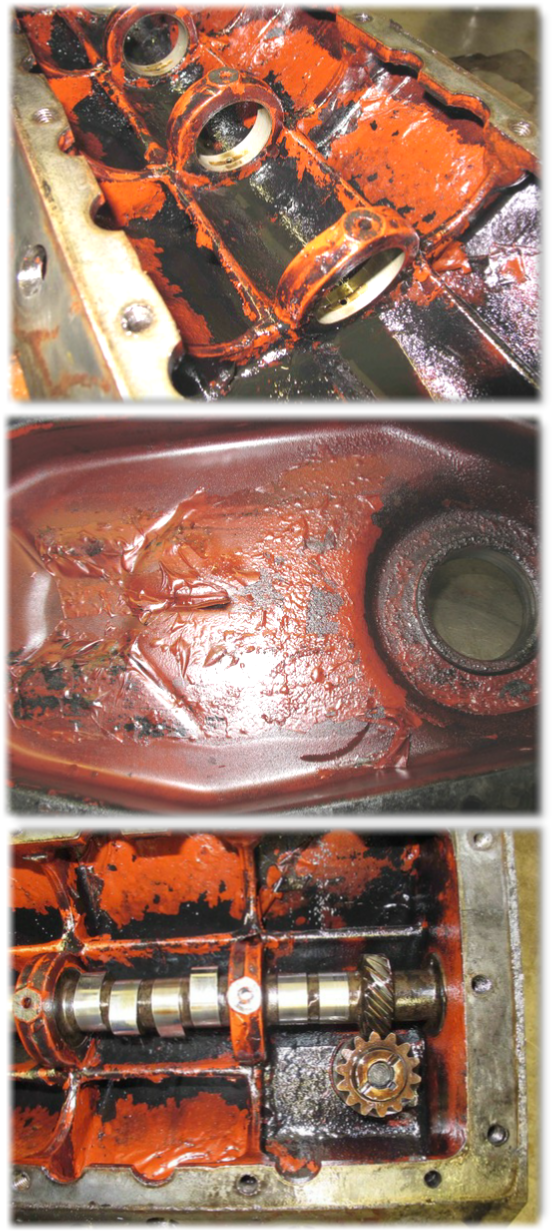
The images here are of a Daimler SP250 engine that had a recent home rebuild. The red paint/coating has failed dramatically and the pictures speak for themselves. The failure of the coating was almost certainly down to poor surface preparation and inadequate cleaning & degreasing.

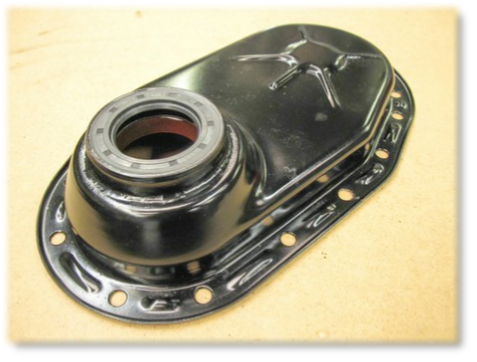
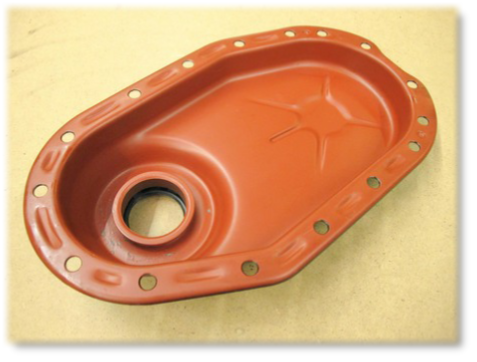
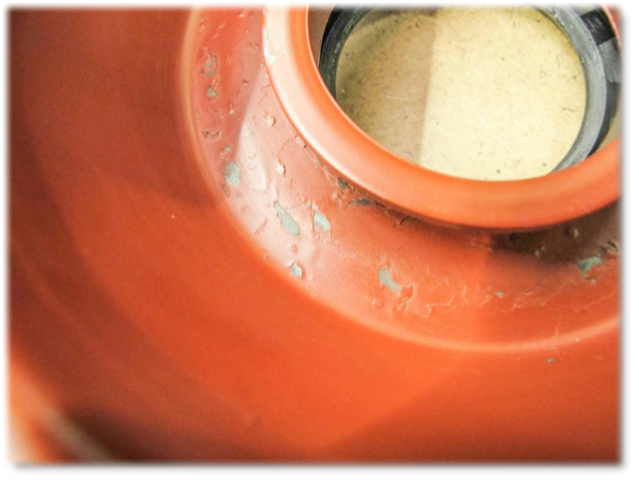
Here you can see a V8 timing cover that a customer wanted fitting to his engine we were building. The timing had been modified for a lip seal and on the surface looked good, shiny black on the outside and red coating on the inside, just like the factory intended. Unfortunately the red coating had already failed as can be seen on the right. Flaking, cracked red paint and this component hadn't even come into contact with any engine oil. It is clear to see what the outcome would have been here. The cause again down to poor surface preparation and care. Needless to say we didn't fit this timing cover.
This is a good question. We have a good idea why the manufacturers of old painted the insides of the block but how does that compare today?
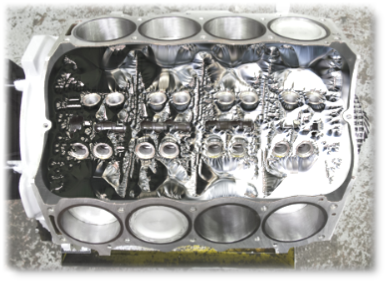
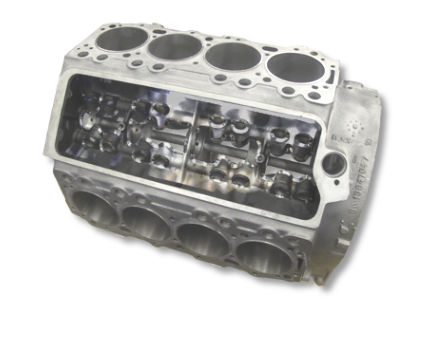
If we have established that the only real benefit of internal engine coatings in the modern day is to assist oil return and improve oil control. A better alternative would be polishing. All the surface roughness and casting marks are ground back to a smooth finish. The smoother and the more polished the better the oil flow characteristics. This operation will also work on both cast iron and alloy castings. The other big benefit is that there is no chance of anything ageing, de-
The benefits of painting the outside of the cylinder block for aesthetics and rust protection are well known and certainly a good idea. Some would also argue that painting the outside of the engine black could aid engine cooling due to the emissivity of the coating. The same reason coolant radiators are painted black. Painting the inside of the engine only really carries one main advantage of improved oil control of which V configuration engine can see the best return. As detailed in this case study there can be some serious consequences should the internal coating fail. The problem is that you cannot see what is going on inside. The coating will eventually fail as the evidence shows. This failure may occur in 60,000 miles or 6 miles and you will not know. For competition engines that are stripped & rebuilt annually or on a more regular basis the coating can be monitored and maintained if necessary and it is this type of engine which will see the most benefit of improved oil control, an important consideration for this type of engine. If the coating/paint does fail within any engine be it road going or competition it will entail a full engine rebuild & thorough cleaning process which will be both time consuming and costly in order to rectify. Ask yourself why you want to paint the inside of the block. Is it the fact that the inside of the block is stained and dirty and the paint would cover these problems and look like the rebuild is a “proper” job or is it that you have genuine concerns about oil returning to the sump in an efficient manner. We think the risk outweighs the benefit. If you do paint the inside of the cylinder block just make sure it doesn't come off.

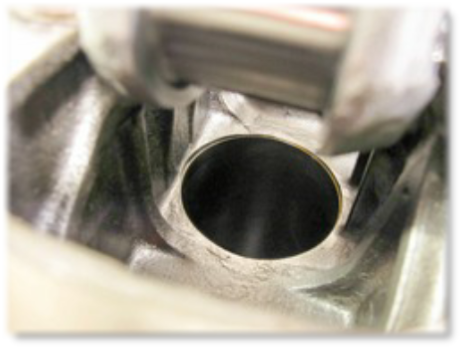
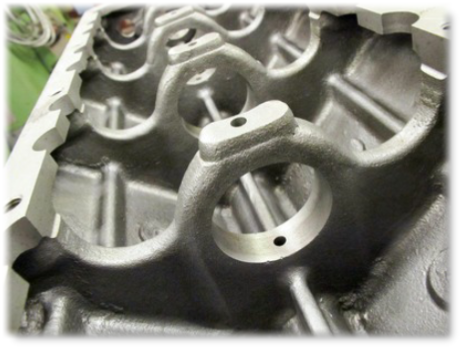
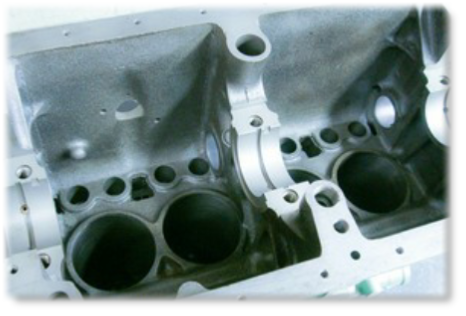
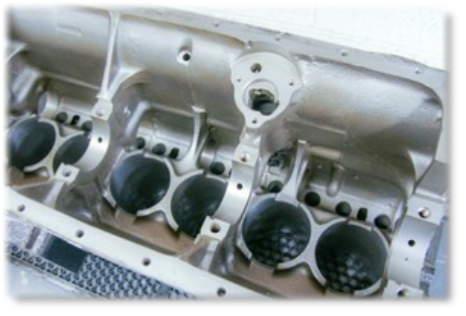
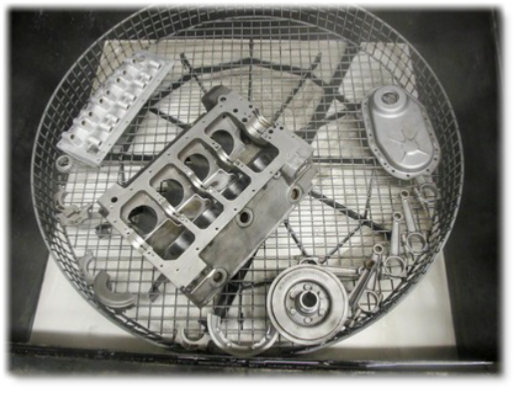
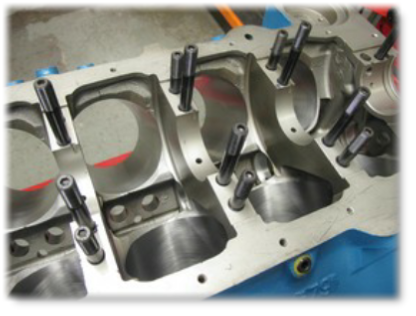
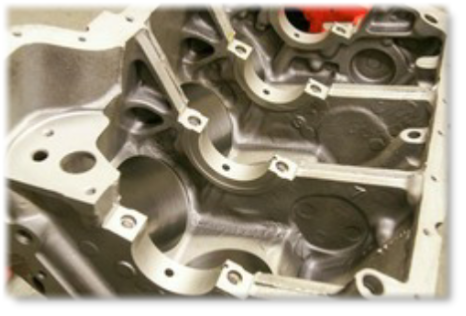
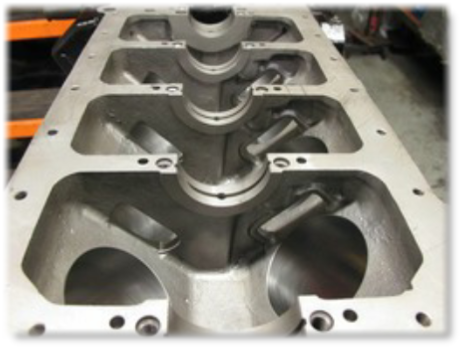
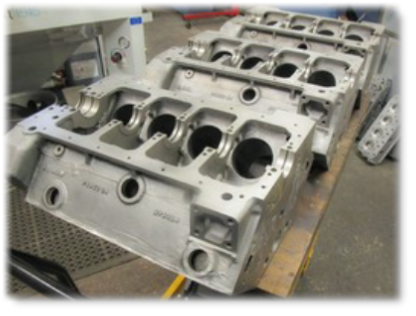
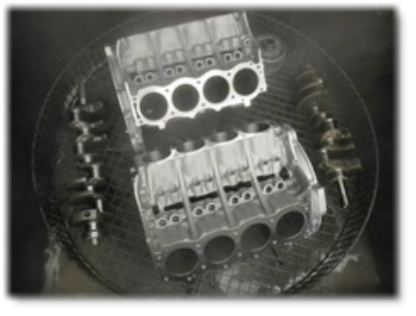
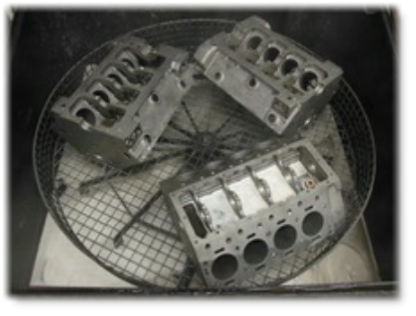
We have dabbled in the use and application of the Red Glyptal internal engine paint in the past. We have a large industrial oven that allowed us to bake the coating as stated in the instructions and our cleaning machines ensure a good subsurface. As far as we know the procedure was indeed successful but there is always a concern that a problem might be around the corner. We no longer use any sort of internal coatings as a preventative measure. If it isn't on it cant come off. A thorough chemical cleaning, dipping & vapour blasting procedure removes all traces of original coatings, stains oil & grease. That's it, that's all we do and the images below are an example of this. We find this is the best starting point for our engine builds.

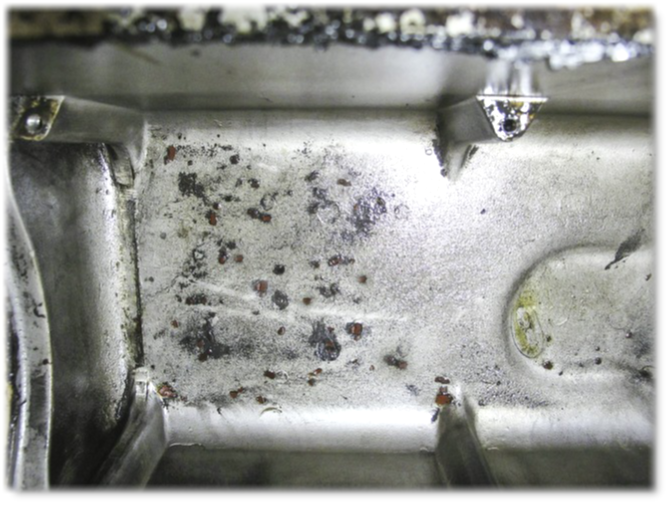
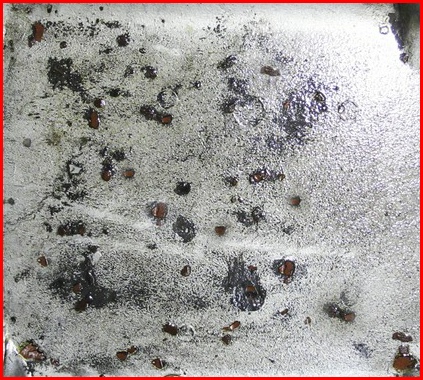
LEFT: Here a sump pan from inside, with the engine oil drained and baffle plate removed. Small flakes of red paint can be seen in the bottom of what otherwise is quite a clean sump. These loose flakes of paint coating can be drawn up to the oil pick up and restrict oil flow. Some flakes are small enough to be drawn through the oil pick up gauze and into the oil pump. The main oil filter should trap any particles that make it that far but filtration flow will be compromised.


Corrosion protection when casting many blocks during production.
Corrosion protection is not required to the same degree as we are now only dealing with few castings at most and can keep on top of any corrosion issues that may occur.

It was easy to do so, as the blocks were clean as they had just been cast and not subject to oil contamination.
It is much more difficult to apply now. Firstly all of the original coating must be removed and all traces of oil, carbon & grease must be removed to ensure correct application. The coating should also be baked in a large oven.
Easy to see which machining processes had been carried out or which needed to be done.
The cylinder block has already been fully machined so we do not need a visual aid any longer.
To Seal any pin holes or porosity issues.
It appears the coating was not carried out to cure any porosity defects. Evident by the fact that the inside of the timing cover which is a steel pressing and the timing sprocket and oil pump body were coated.
It looks good. It looks professional. It covers a multitude of sins.
This is a question of “Vanity or Sanity” Yes there are no two ways about it the block looks great and if you are not aware of the possible consequences. There is no reason not to do it. Just make sure your block has been thoroughly and properly cleaned, degreased and prepared for the coating. You cannot paint over any old stains, or dirt marks without compromising the adhesion of the coating.

To create a smooth interior surface that allows for better oil return to sump improving oil control.
This is the only real genuine benefit that remains. However this was not the original intention as indicated by painting the whole cylinder block both inside & out. A sort of happy accident or beneficial byproduct. Improved oil flow and oil control is a very important aspect that is often overlooked. Just make sure the coating does not come off as this creates the exact opposite effect.
To stabilise the interior after casting during mass production. Retain any surface defects, dross, flashing, inclusions.
The block interior can and should be cleaned out correctly when removing the original coating. This includes manual removal of these characteristics of the original casting procedure.